I’ve read Madam Bovary three times, all before I turned twenty. The first time because my high school English teacher said it was a great novel, and I wanted to be the kind of girl who read great novels. The next two times were for two different college literature classes. The basic plot is lodged in my head all these decades later, but it’s not a book I care about one way or the other. The bit I obsess over is what Flaubert is said to have said about his most famous work: I am Madam Bovary; I am all of my characters.
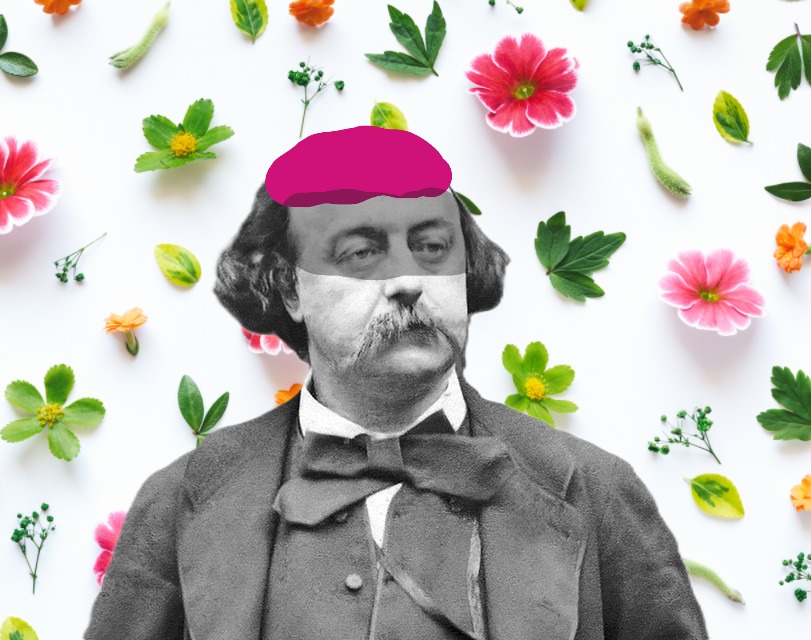
Yes, yes, yes, I say as I try to write an epic yarn. I am the one making up this story; I am all my characters. It’s the truth.
I attended a lot of creative writing workshops in the previous century. I don’t regret this– the structure, the exposure to multiple teachers. Like most experiences, it was mixed. Not all advice is useful to all writers. If you’ve attended a lot of creative writing workshops, there are phrases you’ve heard many times. One is “write what you know.” Maybe that’s useful to you. I think that, for some of us, it’s bad advice. We end up trying too hard to create stories out of our own experiences. When I do it, the result is forced and uncomfortable for everyone— reader and writer. It’s healthier for me to lead the kind of life no one would ever want to read about. That’s my goal for my personal life– stay boring. My my goal as a writer is to create stories that are interesting to me. For that, I need to tap into curiosity and imagination.
Another workshopism I’ve heard many times: good writers steal. The goal is to take the material you’ve discovered and transform it in such a way that no one can recognize the source. I’m not sure I agree with that either. Personally, when I’m reading, I like a little nod to a tradition that I can recognize. Folklorists say all tradition is change. Mark Twain said history doesn’t repeat itself but it often rhymes. I say the vacuum we live in is our present. I’m interested in history, but I know I can’t repeat it. All I can do is write from my point of view. The closest I could ever hope for is a clever rhyme. I can read the sagas, collections of tales, histories of pirates and Vikings and Irish monks, but ultimately all I can do is borrow a few details, some data for street cred. The treasures from my sources don’t ever leave their original binding. Nothing is stolen.
I read a lot of nonfiction in the last two decades. Raising my daughter, I swam in it– wanting so much to know how to do it – how to be a good mom. When she moved into the dorms, for six months I indulged in nothing but fiction– the kind of stories I loved when I was growing up. Books with a little magic. And now that I am trying to write this thing that I call an epic yarn, I’ve pretty much put fiction aside and immersed myself in research. I’ve read books of keeping sheep, and on Atlantic exploration. I’ve tried to understand how seals give birth and how currents work with tides. I’ve read multiple versions of the mythology I incorporate. I’ve read books that I’ve loved for their scholarship and for their clarity. Some historians, I’ve noticed, sneak poetry into their prose. I’ve connected with some of these writers on a personal level.
However, I’ll probably never be a nonfiction writer. I don’t think I can write with authority on anything that is outside my imagination.
My favorite books, the ones that I think about years after I finished reading them, the ones that strike me as great works– Jane Eyre, The Brothers Karamazov, Richard Powers’ The Overstory— are all novels. Big fat novels with lots of characters, lots of moving pieces. They exude honesty and precision of detail, but they don’t pretend to be nonfiction. Their core is all make believe.
I’m trying to maintain the balance. I’m not saying I’m writing a great work (yes, of course that’s the dream). I’m making up a story and trying to create a landscape the reader can exist in comfortably, knowing I will be honest in my effort. All of my plot and all of my characters are drizzling out of my brain. My research is simply scaffolding–a plywood set for a play. At some point in my life, the source material entered my brain from my reading and my experience and my temperament, which I suppose is somehow a product of my DNA. For better or worse, everything I write is limited by my point of view. I am all of my characters.